What the bank protects
01 / The principleVariety integrity is fragile. Mislabeled seed, accidental crossing, and generational drift quietly erode the genetics that give a coffee its character.
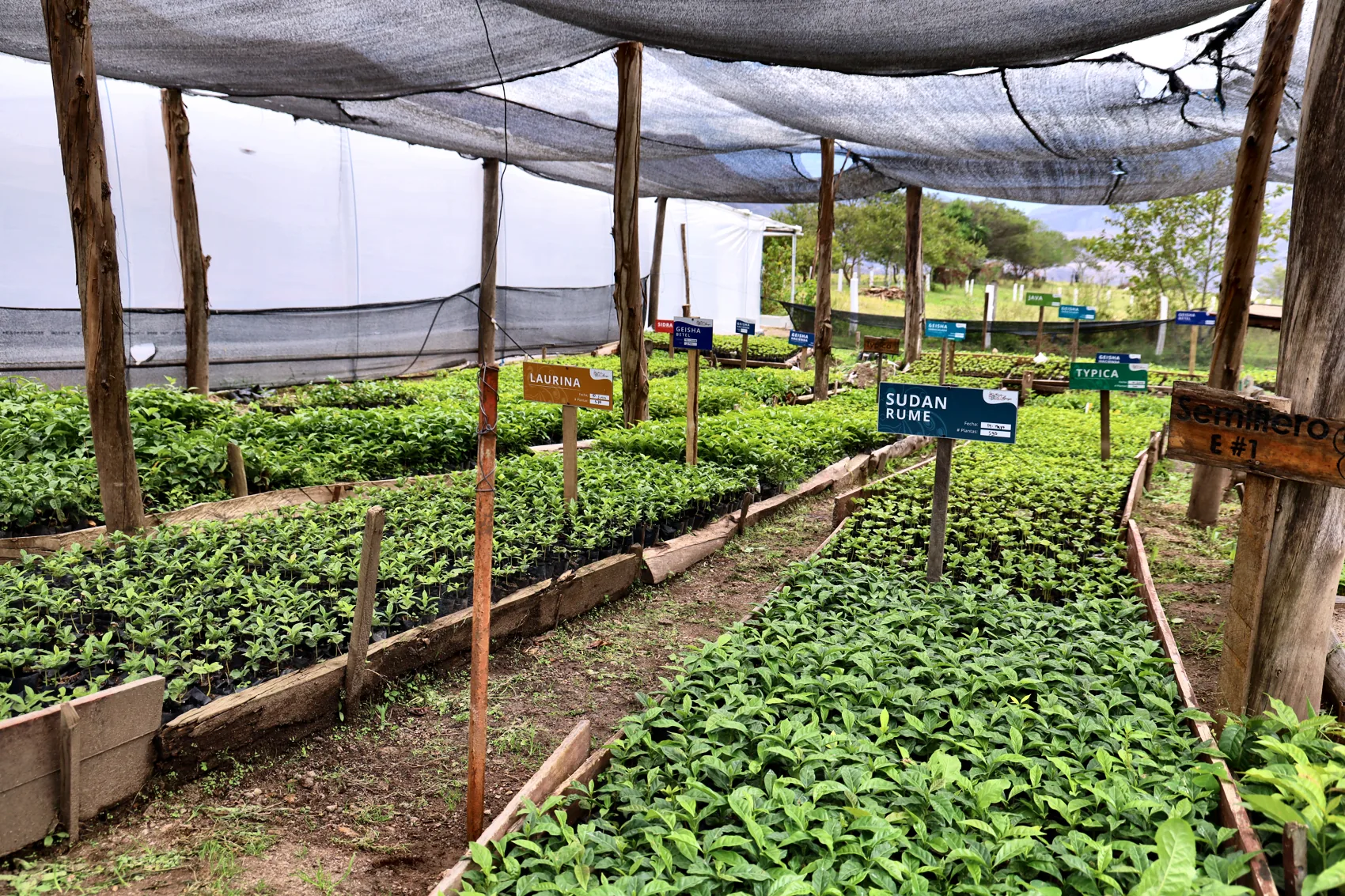
Cafexporto answers this with a private genetic bank: a controlled collection of first-generation mother plants, identified and kept apart so each variety stays true. Seed for new plantings is drawn from these mothers, not from open lots, so the lineage of every tree on our Projects traces back to a known source.
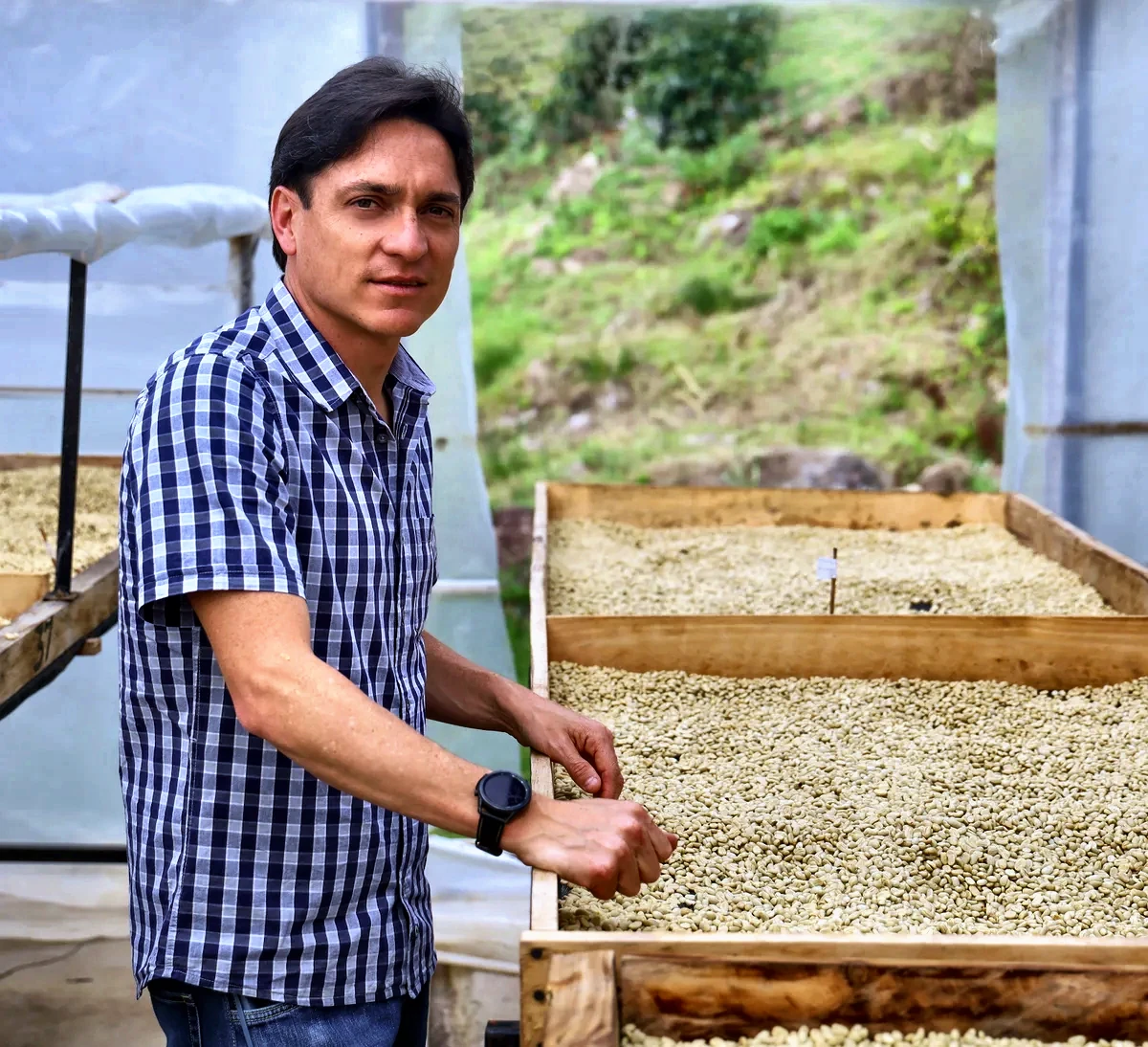
This is Juan Peña’s discipline made structural. Rather than verify a variety only when it reaches the cupping table, we protect it at the point where it begins.
Varieties we preserve
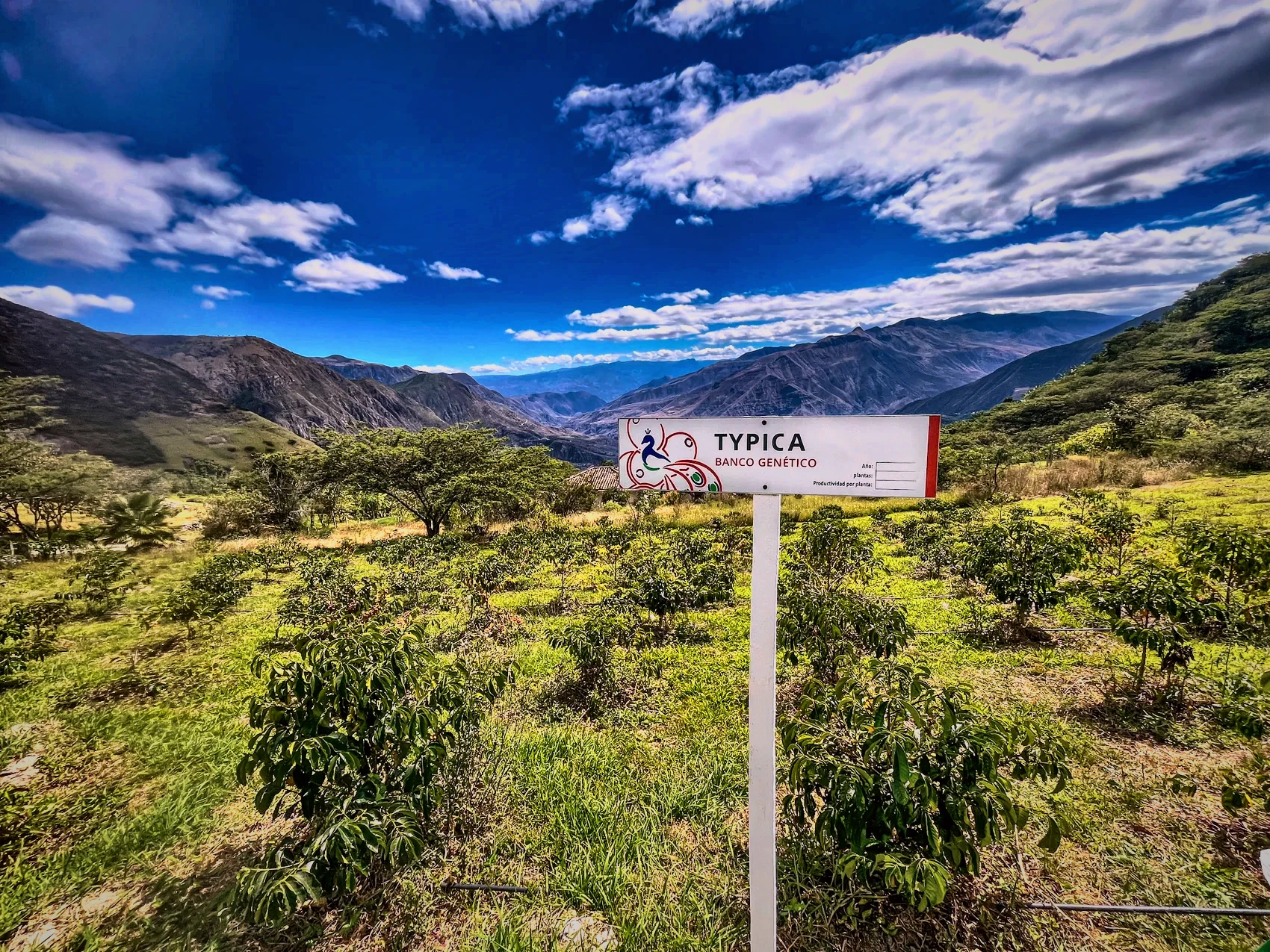
02 / The collectionTypica Mejorado
Despite the name, not a Typica. WCR DNA testing confirms a Bourbon and Ethiopian-landrace hybrid. Floral and fruit-forward with panela sweetness, it is our highest-volume premium, grown on all three Projects.
Sidra
A prized Ecuadorian variety carrying Ethiopian-landrace influence. Jasmine and orange blossom, tropical fruit, and a fuller body than Geisha.
Geisha
The Gesha landrace behind our 90+ lots: jasmine, bergamot, black tea, and a silky, precise cup. Many producers grow Geisha; here it is engineered, lot by lot.
Pacamara
The largest beans in Arabica. Caramel, spice, and stone fruit over a syrupy body. Low-yielding and grown only on select plots.
Pink Bourbon
A pink-fruited rarity: crystalline florals, citrus, and stone fruit, in limited 15 kg lots.
Ethiope
Seed brought from Arabica’s homeland in Ethiopia. Jasmine, lemongrass, and peach over a tea-like body, in limited 15 kg lots.
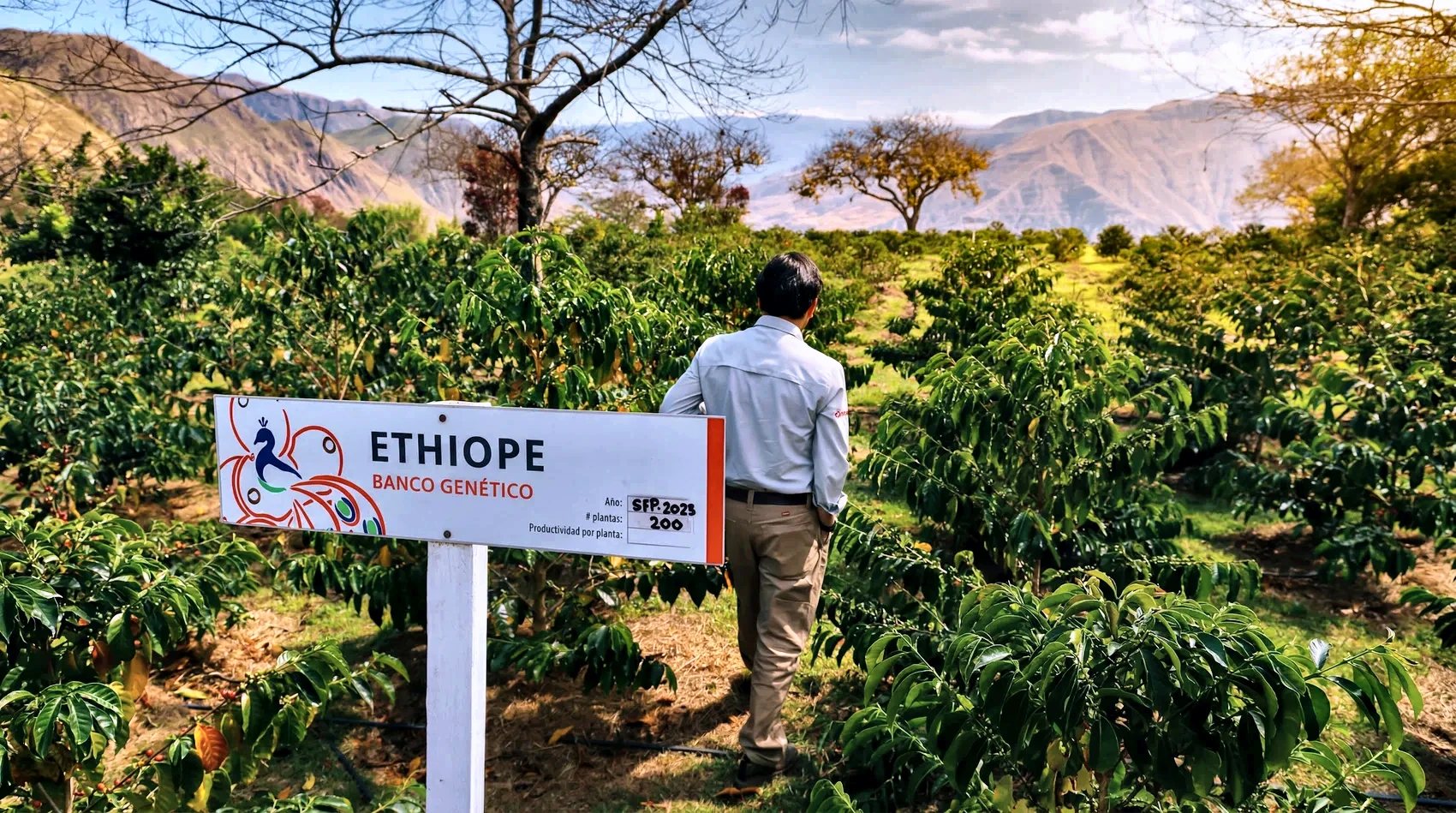
A living archive of Arabica’s origin, preserved and expressed through our Genetic Bank.CafExporto
The collection at a glance
03 / Reference| Variety | Genetic origin | Cup signature | Score | Box |
|---|---|---|---|---|
| Typica Mejorado | Bourbon × Ethiopian landrace | Jasmine, tropical fruit, panela sweetness | 87–89+ | 25 kg |
| Sidra | Bourbon × Typica, Ethiopian influence | Orange blossom, tropical fruit, cocoa | 87–89+ | 25 kg |
| Geisha | Ethiopian landrace (Gesha) | Jasmine, bergamot, black tea, silky | 90+ | 15 kg |
| Pink Bourbon | Bourbon-type, lineage to confirm | Rose, citrus, stone fruit, crystalline | 89–90+ | 15 kg |
| Ethiope | Wild Ethiopian landrace | Jasmine, lemongrass, peach, tea-like | 89+ | 15 kg |
| Pacamara | Pacas × Maragogipe | Caramel, spice, stone fruit, syrupy | 89+ | 25 kg |
| Community blends | Sachimor, Caturra, SL28, Catimor, Castillo | Balanced, chocolate, citrus | 86+ | 25 kg |
Scores shown are floor scores (e.g. "90+" = 90 points or higher). Full per-lot detail is in the 2026/2027 menu.
How it ties to the Projects
04 / In practiceThe bank feeds plantings across all three terroirs: Hacienda La Papaya in Loja, Yacuri in Espindola, Loja, and Yunguilla in Azuay. Each Project pulls verified seed for the varieties best suited to its altitude and climate, so a Geisha planted at La Papaya carries the same documented lineage as the mother plant it came from.
From there the same coffee moves through Integrated Coffee Pulse and into the Cuenca lab, where it is cupped before export. The genetic bank is the first link in that chain: integrity established at the seed, then verified at every step after.