One lab, one standard
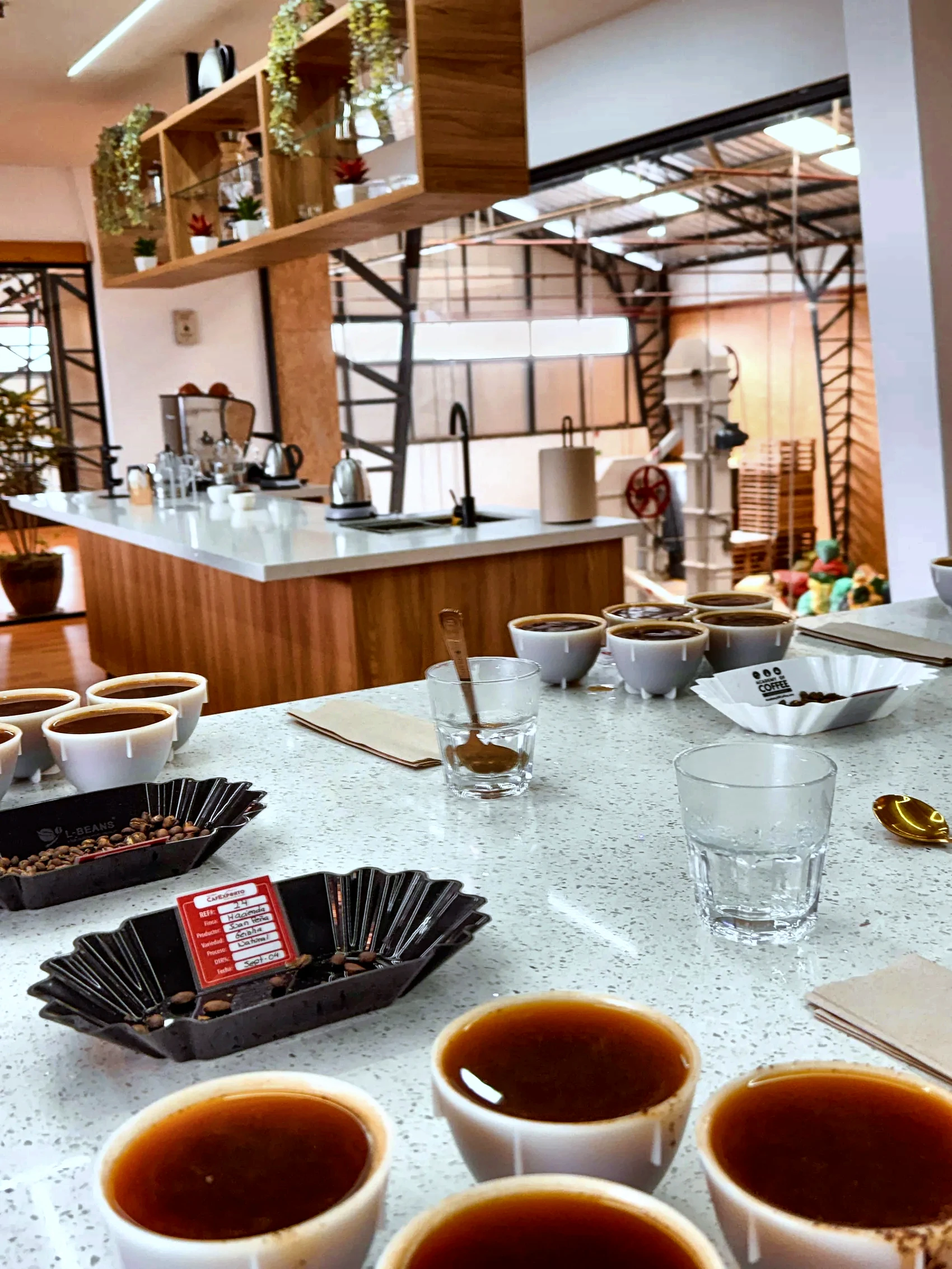
01 / The labOur cupping lab sits in Cuenca, beside the dry mill where the coffee is prepared for export. Keeping cupping and milling under one roof means the people who sort and pack a lot are the people who score it.
Sessions are run on the SCA sensory protocol and led by certified Q-graders, Juan Peña among them, so a lot that reaches a roaster has been confirmed by the same trained palates again and again.
And the palate is shared, not siloed. Through the Cafexporto Coffee School, every employee learns to cup, from the picking line to the export desk, so the standard is understood across the company rather than living in one person’s notebook.
Cupped at five stages
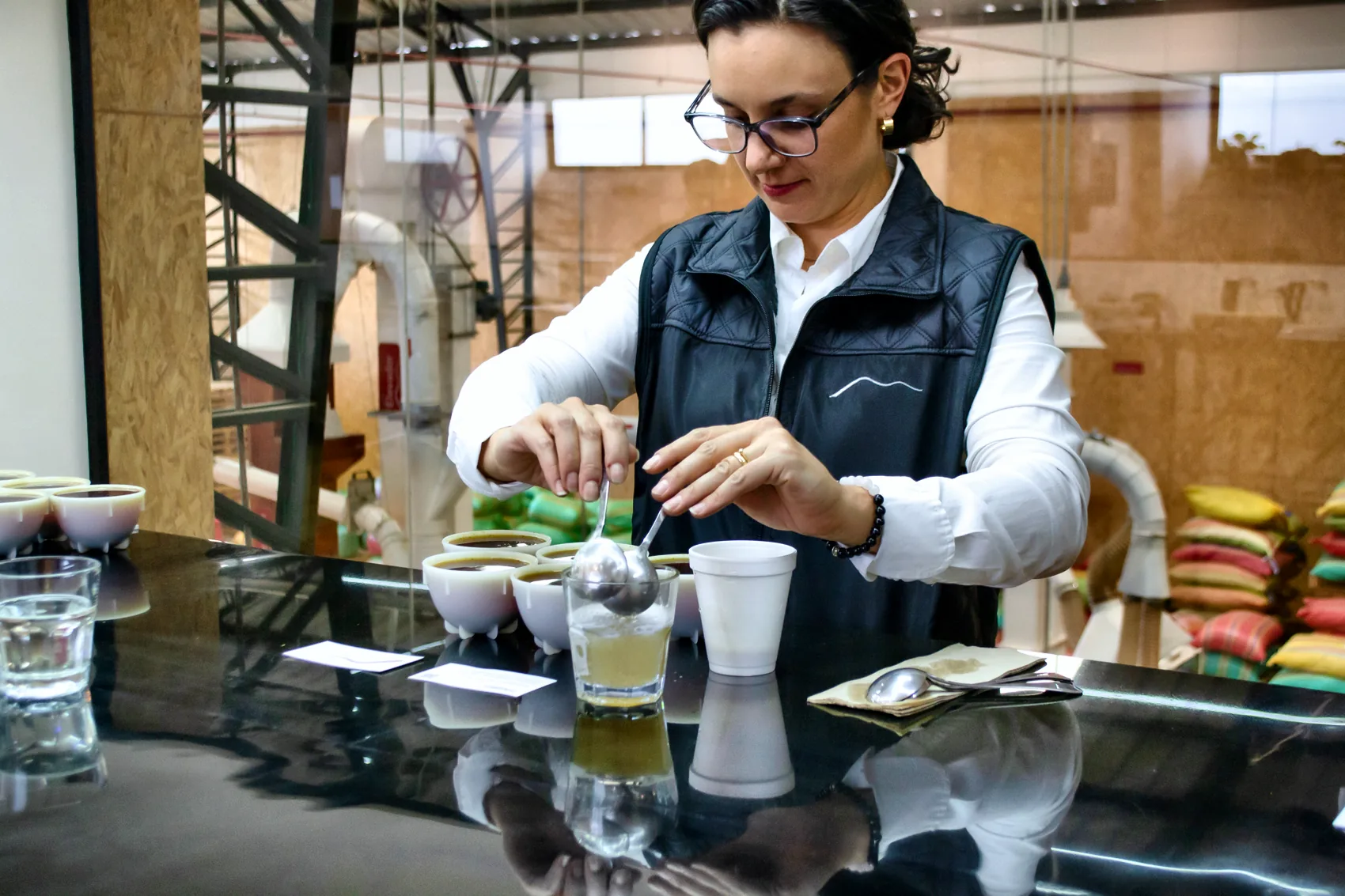
02 / The lifecycleEvery lot is evaluated at five milestones across its life. The first is the farm itself; the last can be pulled and re-cupped after the coffee has already reached your dock.
It starts in the field. Selective picking and careful post-harvest work set the ceiling for everything the cup can become.
Evaluates the lot’s potential and verifies the post-harvest work, guiding any drying or fermentation adjustment.
Monitors the stabilized coffee, catches any drying inconsistency, and validates each sorting pass.
Sets the official sensory profile and creates a mirror sample, checked against your pre-approved profile.
A sealed sample of every lot is held under export conditions, ready to re-cup long after it leaves the country.
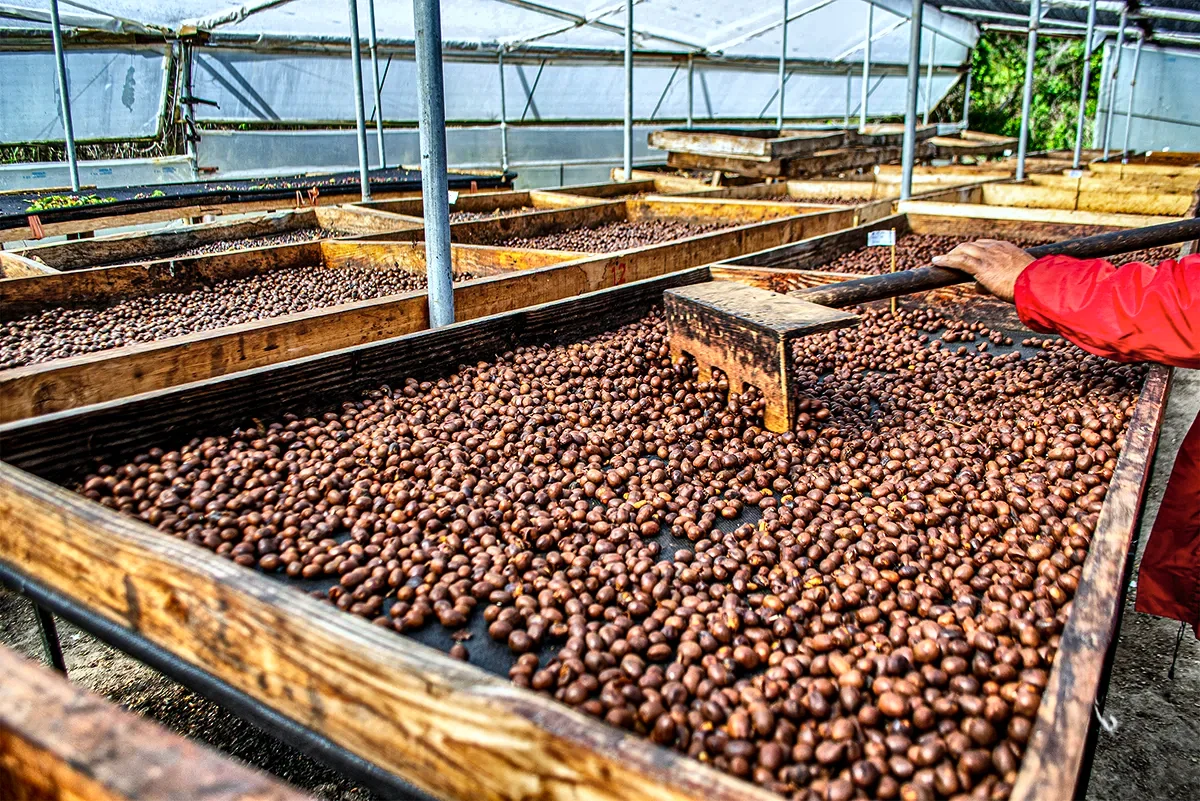
Uniform moisture and density give predictable roasting behavior, so the profile you dial in holds from lot to lot.See the technology →
The most modern dry mill in Ecuador
03 / The lineEach lot is cupped and approved before it even enters the mill. Inside, a fully enclosed line finishes every coffee in sequence.
Hulling
Parchment removed from the dried coffee.
Size
Beans classified by screen size for even heat transfer.
Density
Sorted by density, the trait roasters charge against.
Air
Airflow lifts out lighter, defective beans.
Optical
A colour scanner removes defects by sight.
Hand
A final human QC pass after the machines.
Pack
Sealed into GrainPro liners and 25 kg boxes, ready for export.
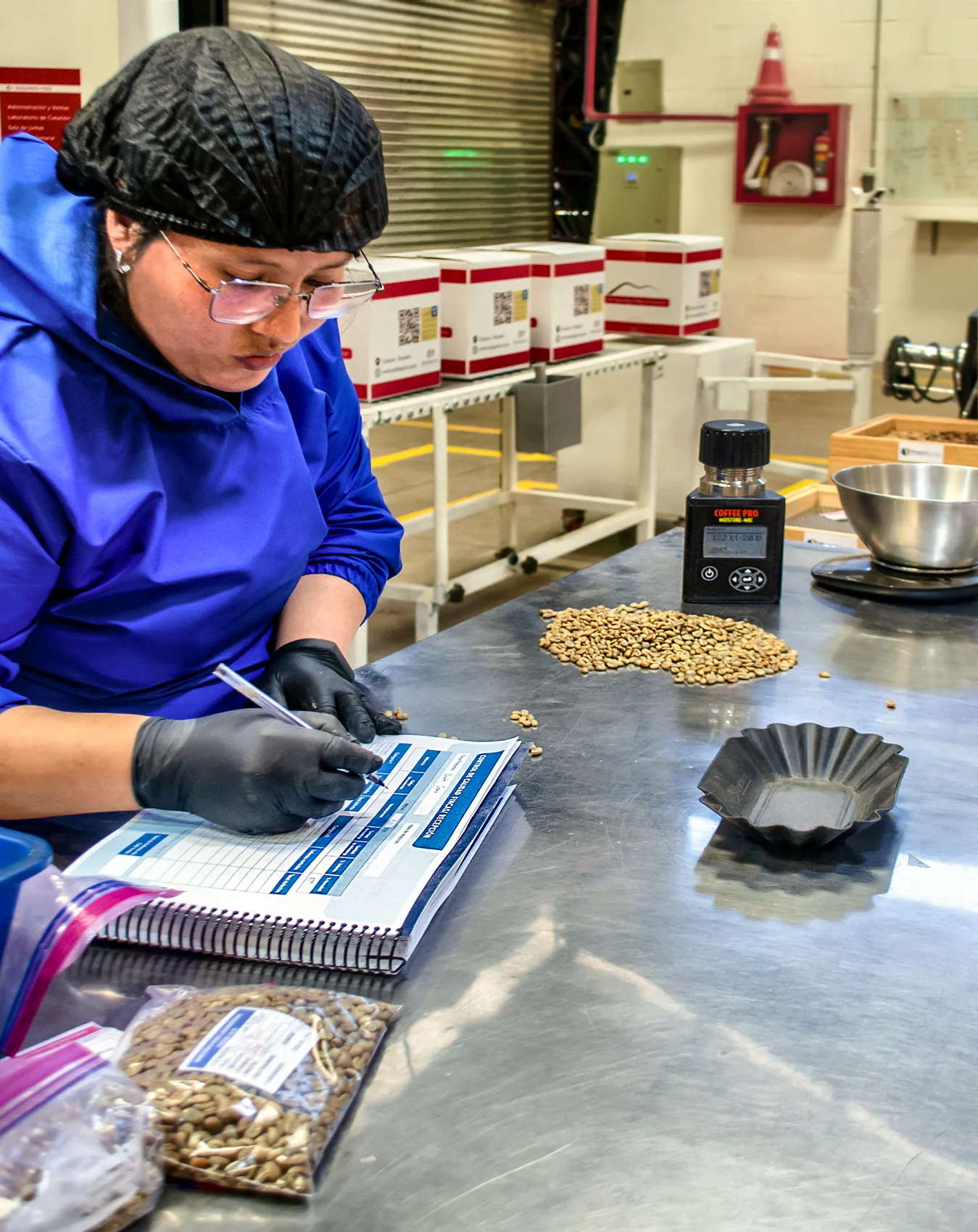
Every machine is calibrated by micro-lot, with the settings confirmed at the cupping table by Juan Peña and Juan Araujo, then tightened each year as the equipment and the experience improve.
Much of the coffee makes several passes before it qualifies to move on. That multi-pass discipline is what drives the low defect counts and the high uniformity a roaster feels on the bench.
Our Quality Guarantee
05 / Our wordQuality assurance does not end at the dock.
If a coffee ever arrives off the profile you approved, we pull the sealed retention sample for that lot, cup it with you against the original, and share the sensory findings openly.
If we agree the coffee has degraded, we issue a credit for the difference. It is a logistical process, but more than that it is a principle: we hold the highest standard in the cup, and in how we treat the people we sell to.
We cup a coffee until we know it will not surprise us, then we keep a sealed sample to prove it. That is our word. Juan Peña · Founder, Q-grader